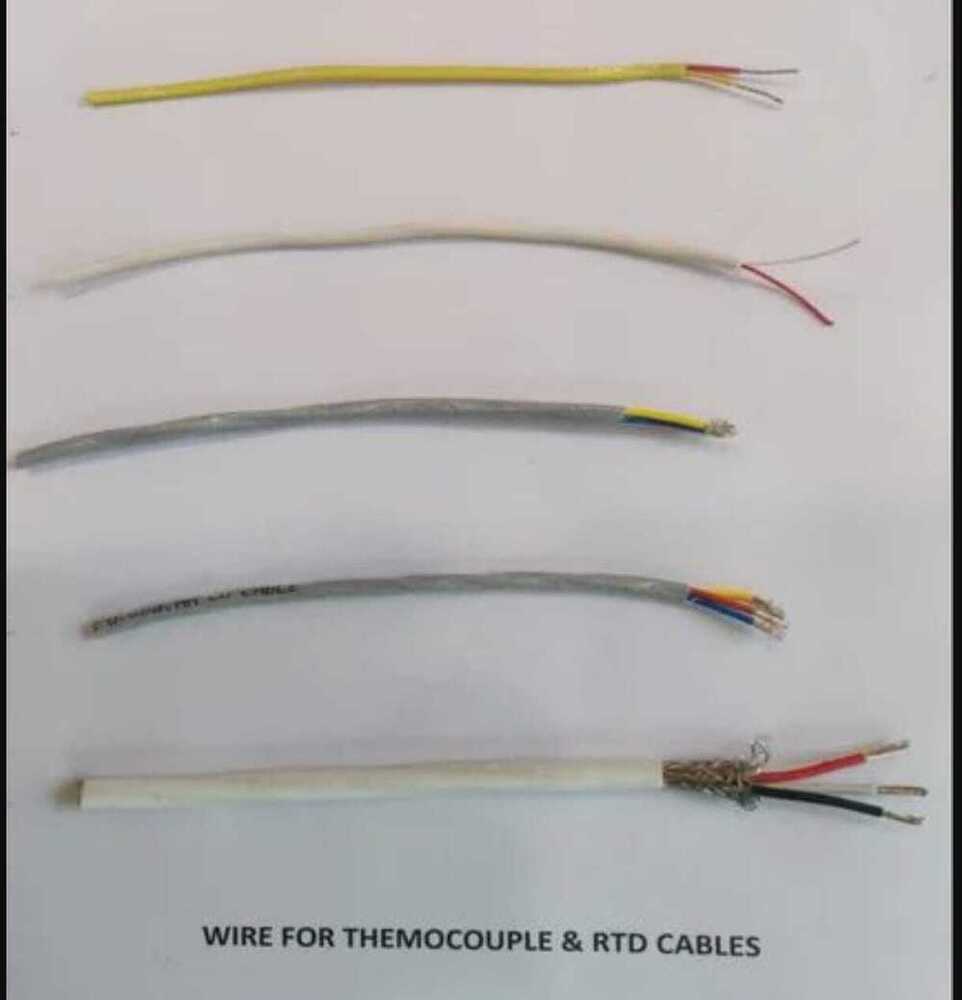
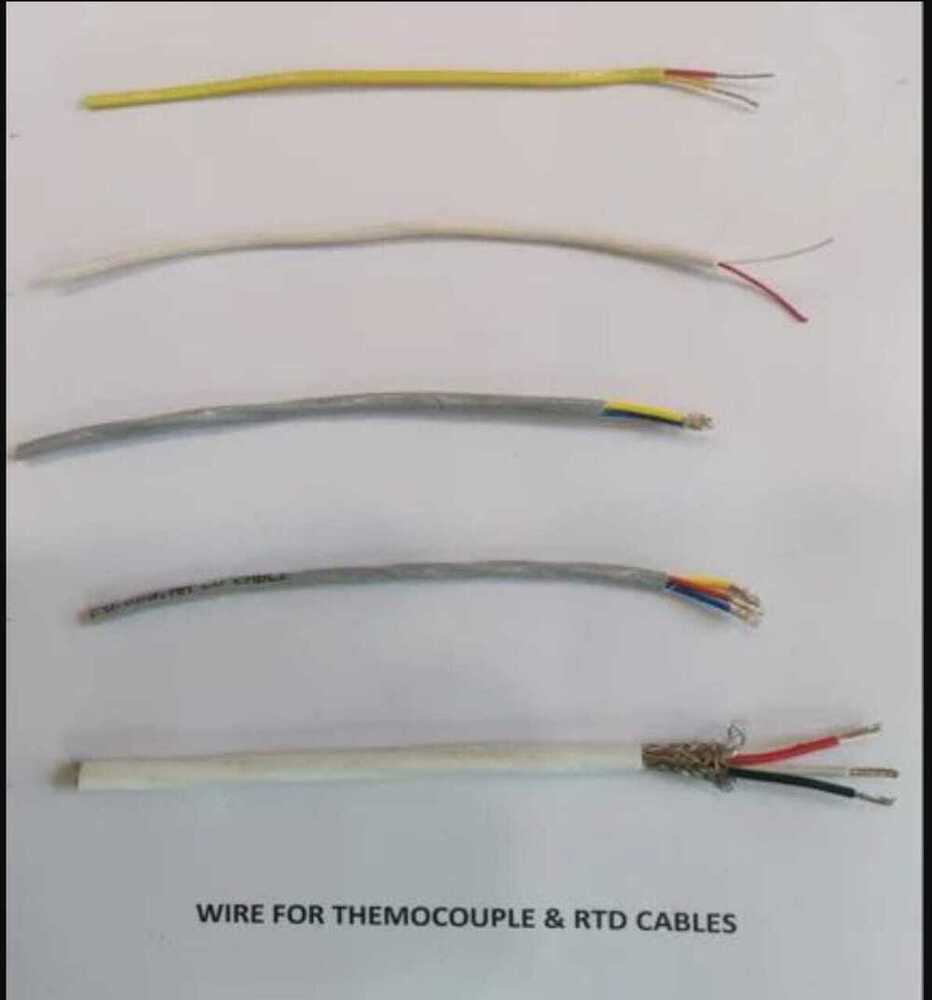
About PTFE-Polyimide-Copper Screening-Silicon Insulated
| Insulation |
PTFE Insulation |
| Conductor |
Solid, Multistrand, Thermocouple Grade Materials as per ASTM E230 / 77 & IEC5843 |
| Inner Sheath |
PTFE Temperature Saturated |
| Outer Sheath |
Mica Tape / Fiber Glass with High Temp. Varnish |
| Operating Temp. |
350 DegreeC |
| Limit of Error |
According to ASTM E230 / 77, IEC 584 |
| Color Code |
According to ANSI MC 96.1 |
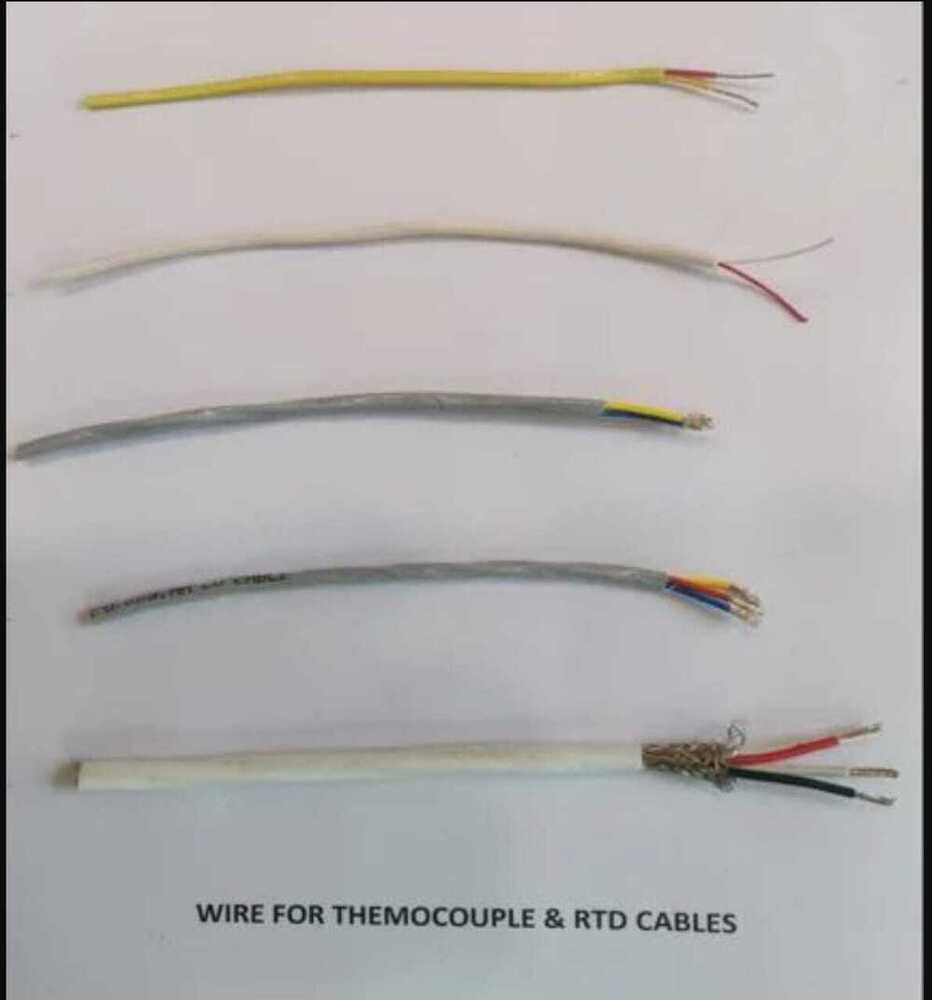
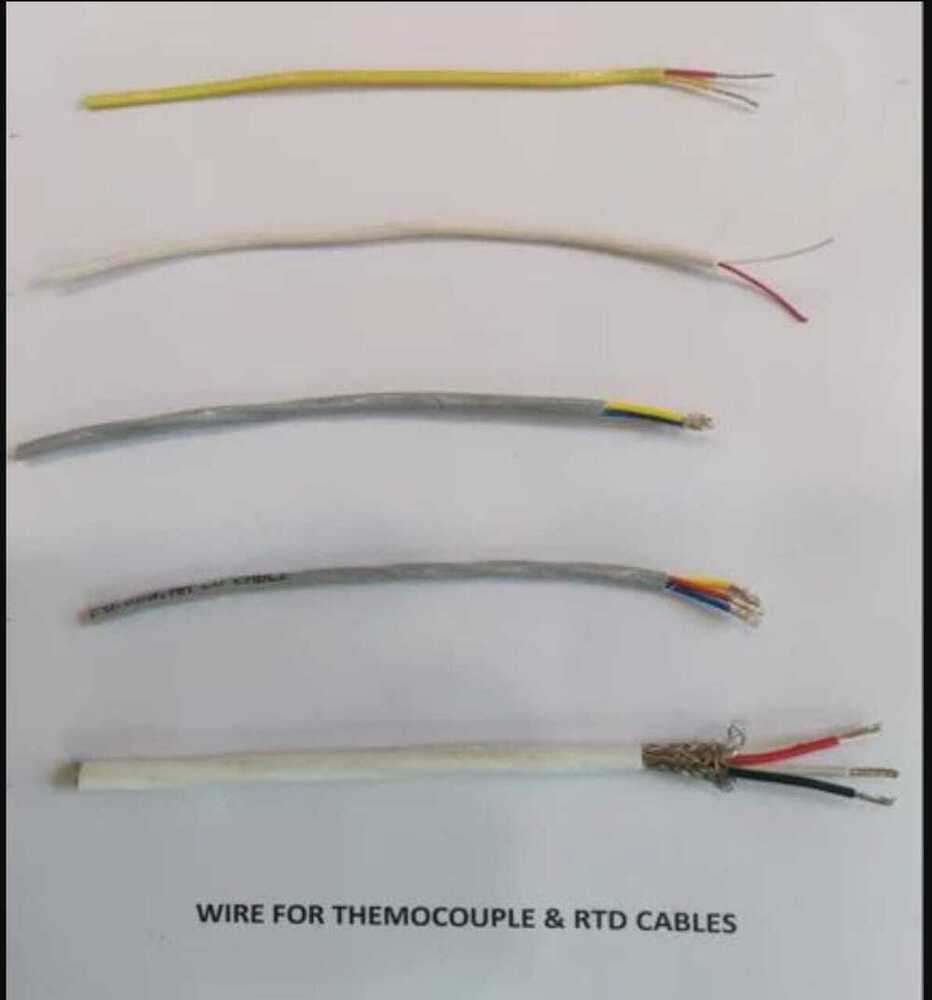
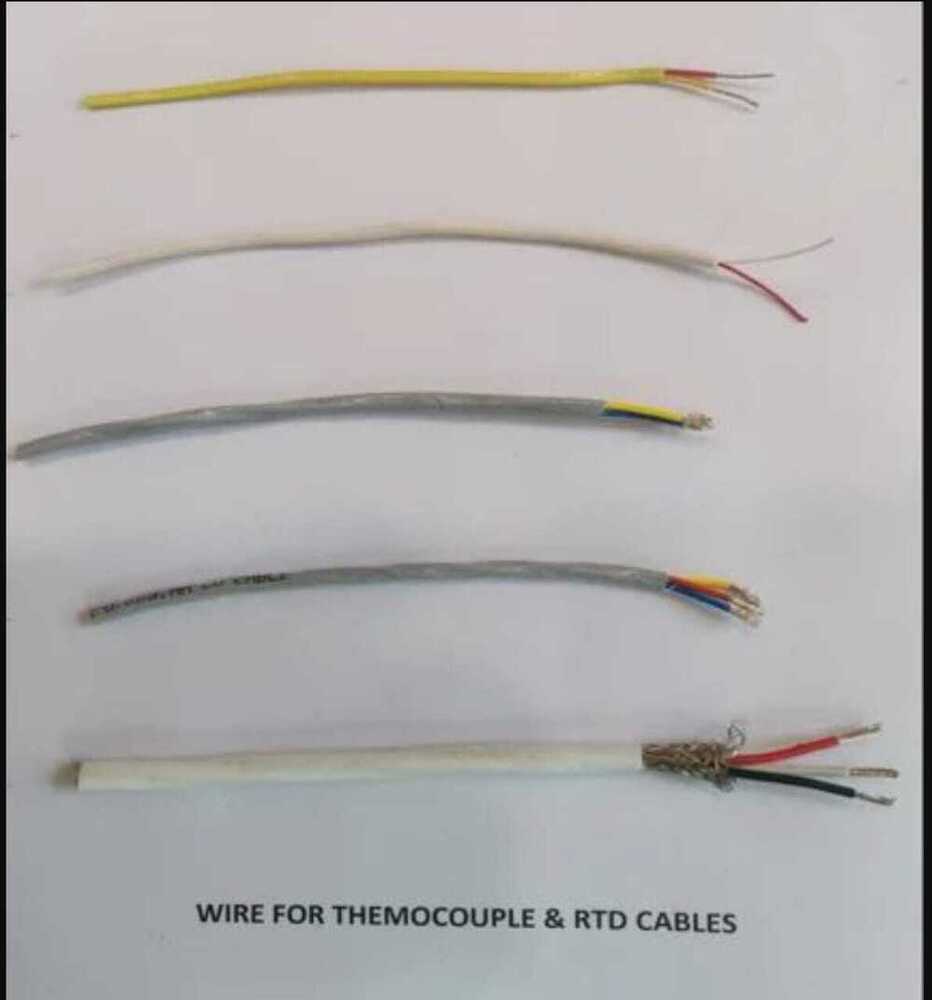
Thermocouple Cables are used to measure the temperature directly.
Thermocouple Extension or Compensating wires are only used to extend a thermocouple signal from a sensor to an instrument for readings.
Exceptional EMI/RFI ShieldingThe PTFE-Polyimide-Copper cable features copper screening that delivers high-level electromagnetic and radio-frequency interference protection. Its construction ensures signal integrity crucial in environments saturated with electronic noise, such as aerospace, defense, and advanced electronics sectors.
Outstanding Resistance and DurabilityEngineered with PTFE, polyimide, and silicon insulation, this cable offers excellent resistance to abrasion, oils, chemicals, and moisture. It is designed to endure high stress, repeated motion, and extreme temperatures, making it a reliable solution for rigorous industrial and high-precision environments.
Flexible Customization for Varied ApplicationsWith single or multiple cores, wire sizes from 0.14 mm2 to 2.5 mm2, customizable colors, lengths, and connector types, this cable is adaptable to a broad spectrum of usage scenarios. Whether for control panels, instrumentation, or specialized aerospace wiring, it can be tailored to meet specific requirements.
FAQ's of PTFE-Polyimide-Copper Screening-Silicon Insulated:
Q: How does the copper screening layer protect against EMI and RFI?
A: The tightly woven copper screening acts as a barrier against electromagnetic (EMI) and radio frequency (RFI) interference, effectively preventing external noise from disturbing sensitive electrical signals within the cable. This ensures consistent signal transmission in environments with significant electronic interference.
Q: What advantages does the PTFE-Polyimide-Silicon insulation provide?
A: The synergy of PTFE, polyimide, and silicon insulation offers superior resistance to heat, abrasion, oils, chemicals, and water. This makes the cable exceptionally resilient, flame-retardant (UL 94 V-0 compliant), and suitable for both dynamic and static installations in harsh or humid environments.
Q: Where can this cable be typically used?
A: It is commonly employed in aerospace, defense, instrumentation, control panels, and electronic equipment requiring robust insulation, screening, and high reliability. Its ability to withstand high voltage, extreme temperatures, and chemical exposure makes it ideal for critical and demanding applications.
Q: What customization options are available for these cables?
A: Customers can select from single or multi-core options, various conductor sizes (0.14 mm2 to 2.5 mm2), stranded or solid copper, color choices, open ends or custom connectors, and cable lengths as per specification. This flexibility ensures the cable meets precise operational and installation needs.
Q: How does the cable perform in humid or wet environments?
A: Thanks to its PTFE and silicon-layered construction, the cable exhibits excellent water resistance and maintains high insulation integrity (>1 G/km) even in humid and challenging conditions, ensuring consistent performance and safety.
Q: When should I choose this type of cable for my project?
A: Opt for this cable when your application demands high EMI/RFI shielding, endurance in extreme conditions, flexible installation, and compliance with stringent safety and durability standards-especially in mission-critical sectors like aerospace and defense.
Q: What benefits does using silk-screened copper cable offer in high-frequency applications?
A: The copper screening supports frequencies up to 1000 MHz, minimizes signal loss, and reduces cross-talk, providing robust transmission capability for applications sensitive to high-frequency electrical noise.



 Send Inquiry
 Send Inquiry

